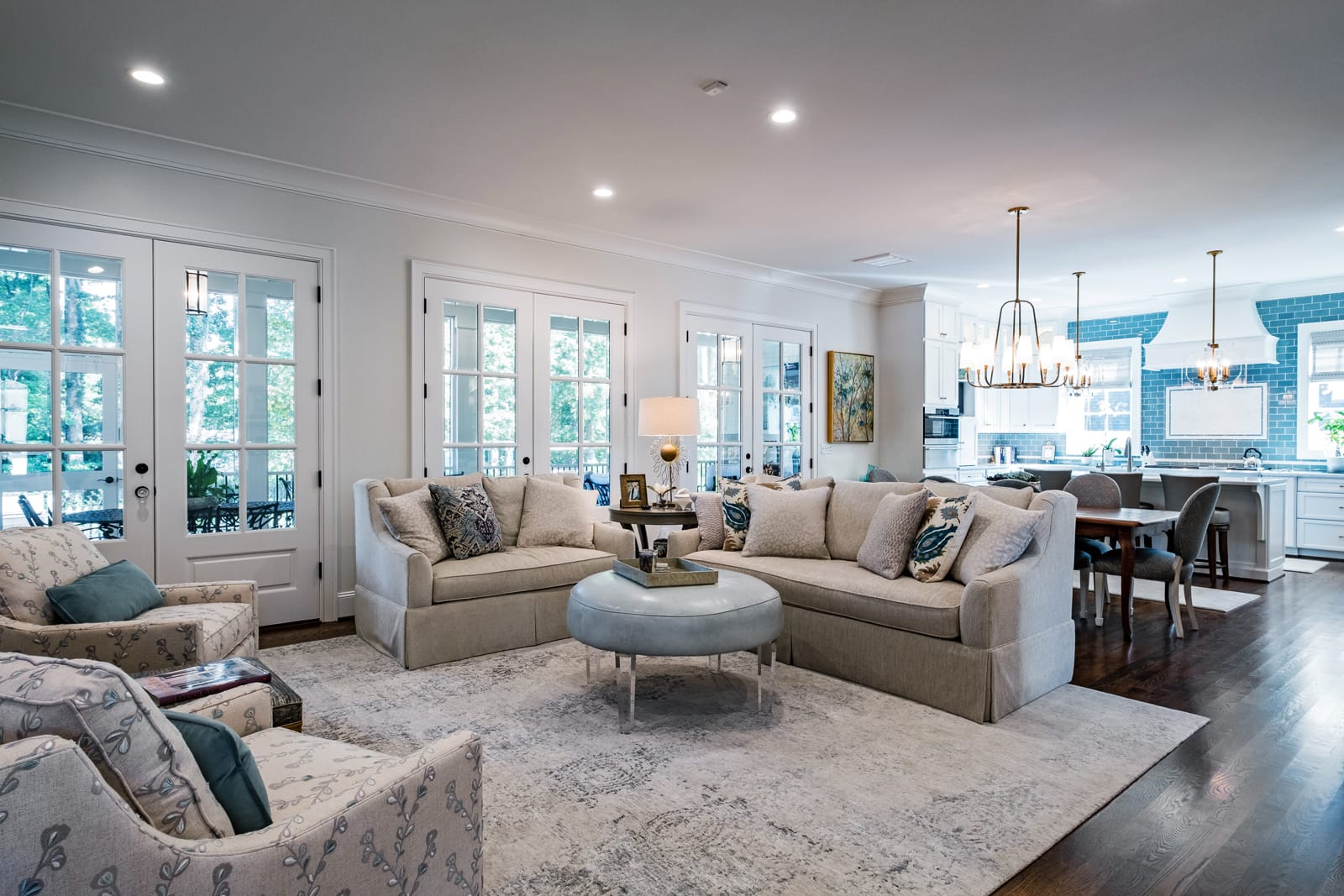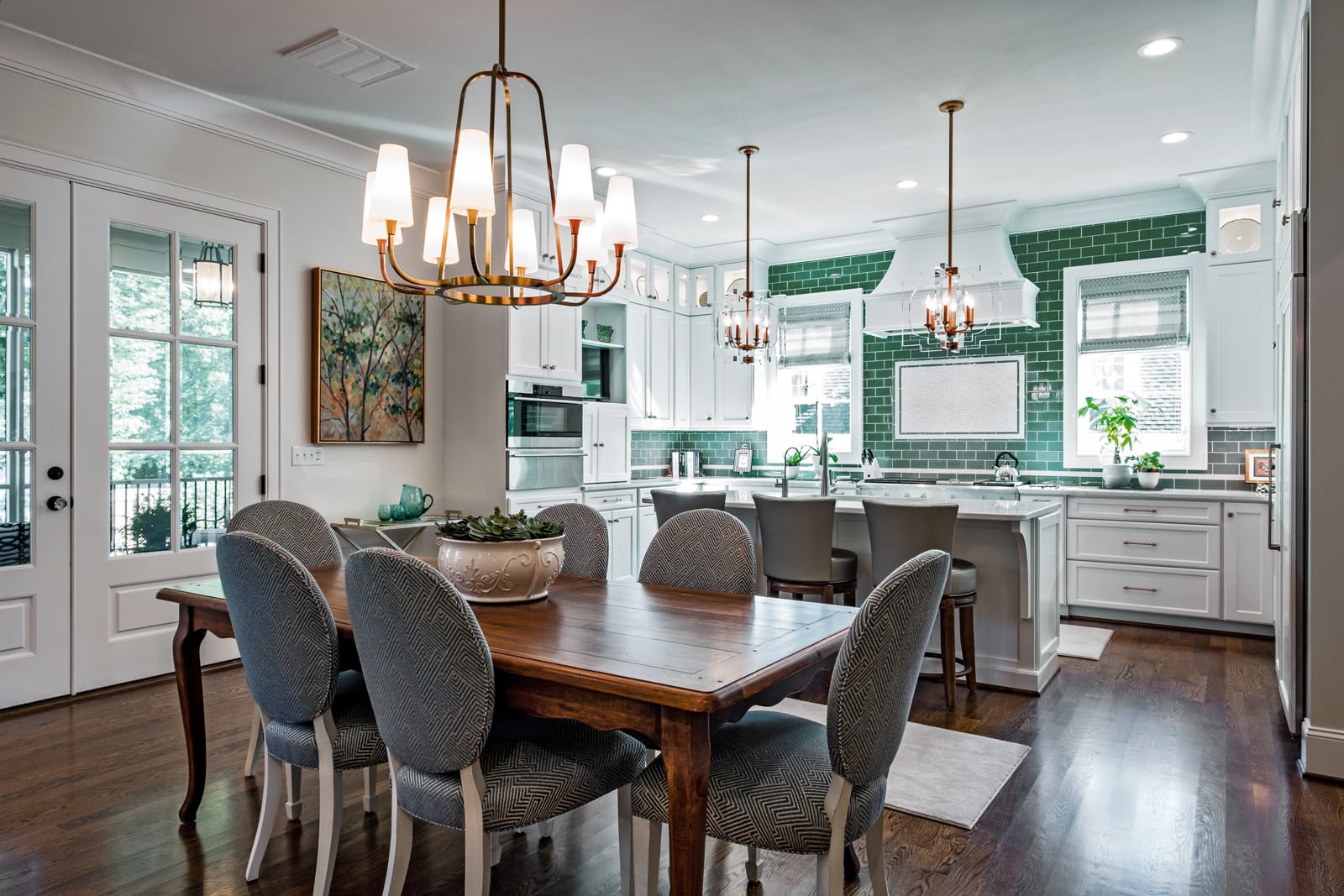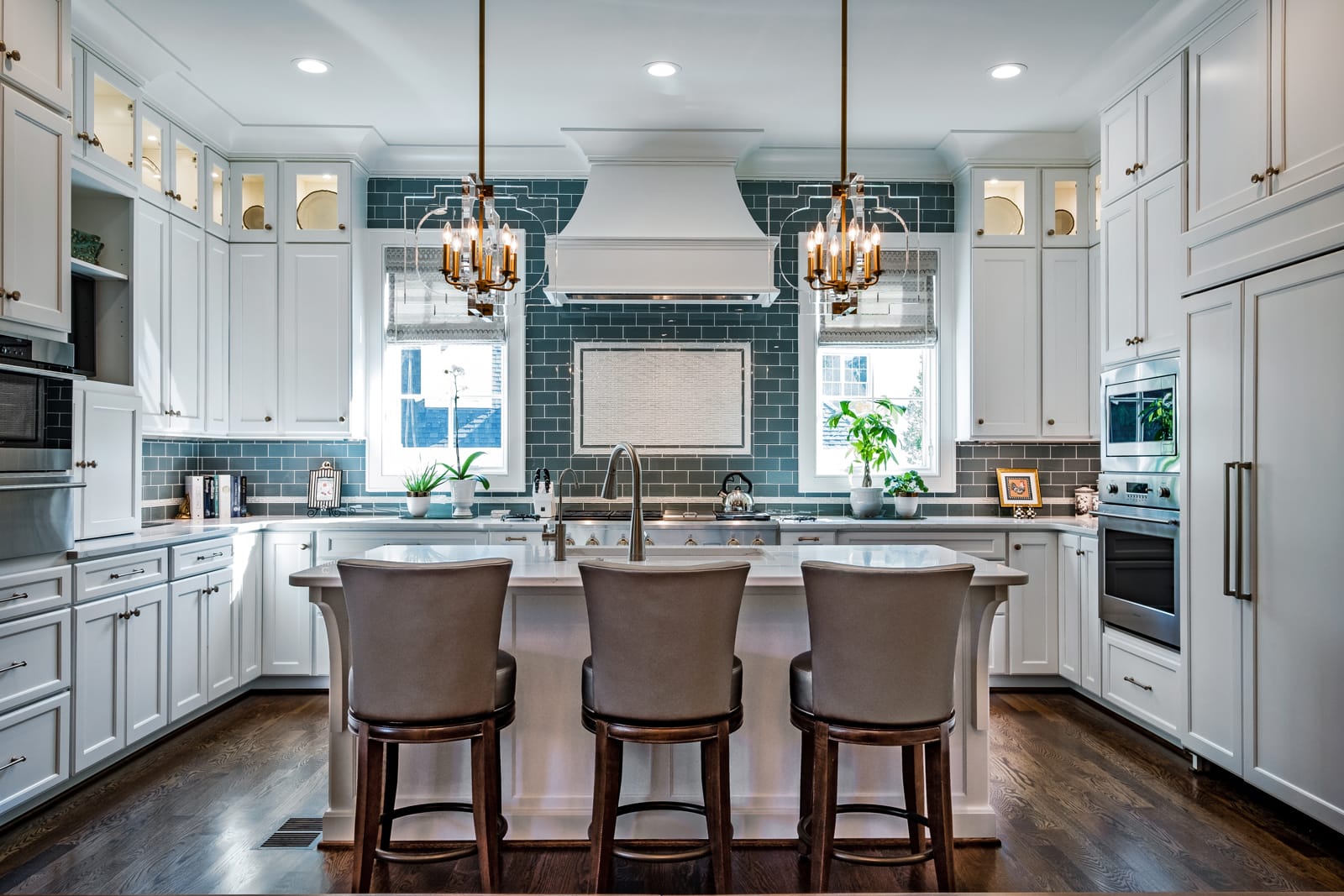
Designing a functional open-concept living, dining, and kitchen area starts with intentional zoning rather than walls. Each space should have a clear purpose while still flowing naturally into the next. Thoughtful furniture placement does a lot of the heavy lifting—anchoring the living area with a rug and seating arrangement, defining the dining space with a centered table and lighting fixture, and using an island or peninsula as a natural boundary for the kitchen. Consistent sightlines are key; when you can stand in one area and visually understand how the others connect, the space feels intuitive rather than chaotic. Layer in practical elements like ample walkways, balanced lighting, and surfaces that can handle daily use without disrupting the visual flow.
To make the entire space feel cohesive, repetition and restraint are your best tools. Stick to a unified color palette and echo it subtly across each zone—through textiles, cabinetry, accent pieces, or even a backsplash that quietly ties into nearby decor. Materials should feel related, not identical; for example, warm wood tones can carry from a dining table into flooring, while soft neutrals in seating can mirror cabinetry or walls. Lighting also plays a major role in cohesion—choosing fixtures in a similar finish or silhouette helps everything feel curated rather than mismatched. When done well, the result is a space that feels layered and lived-in, where each area has its own identity but still belongs to a larger, harmonious whole.
-
"Photo by Jay Sinclair"
-

"Photo by Jay Sinclair"
-
"Photo by Jay Sinclair"