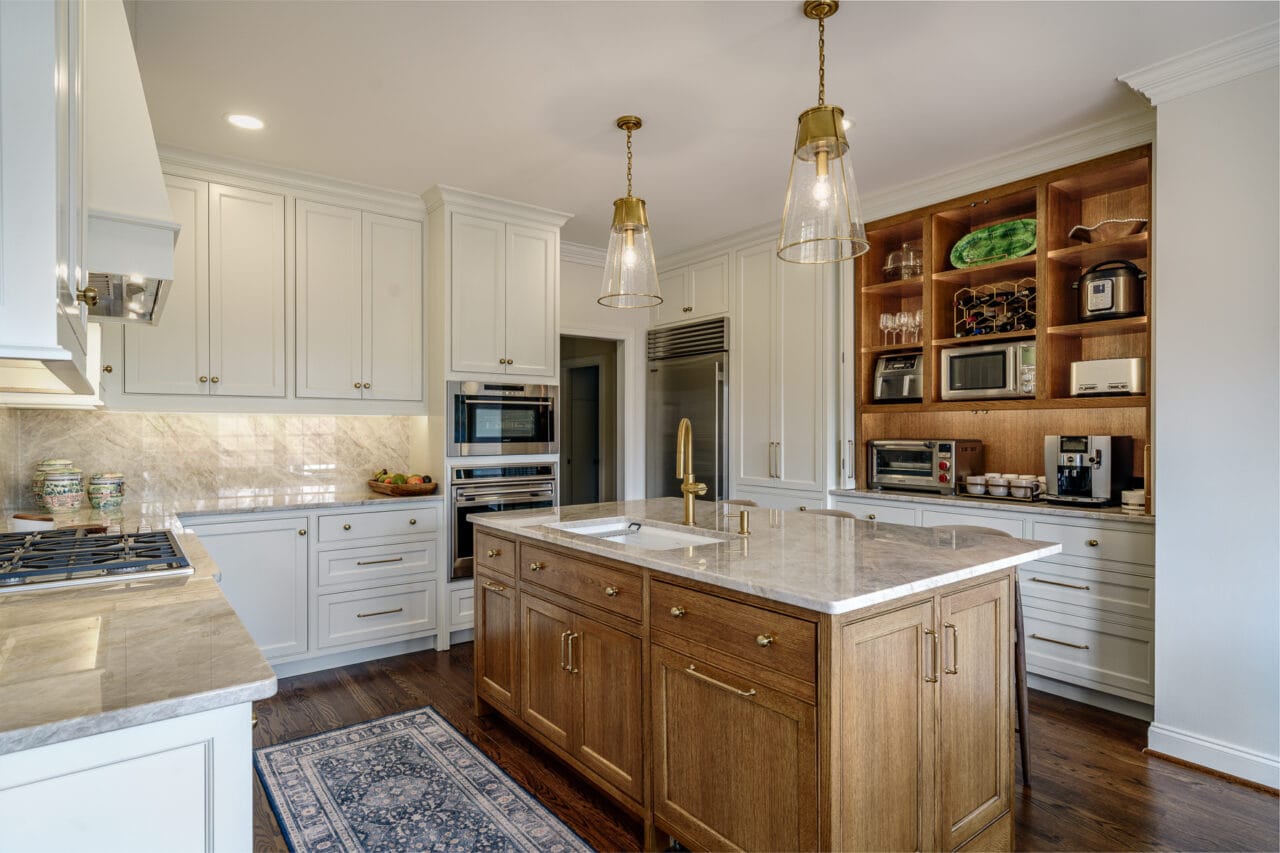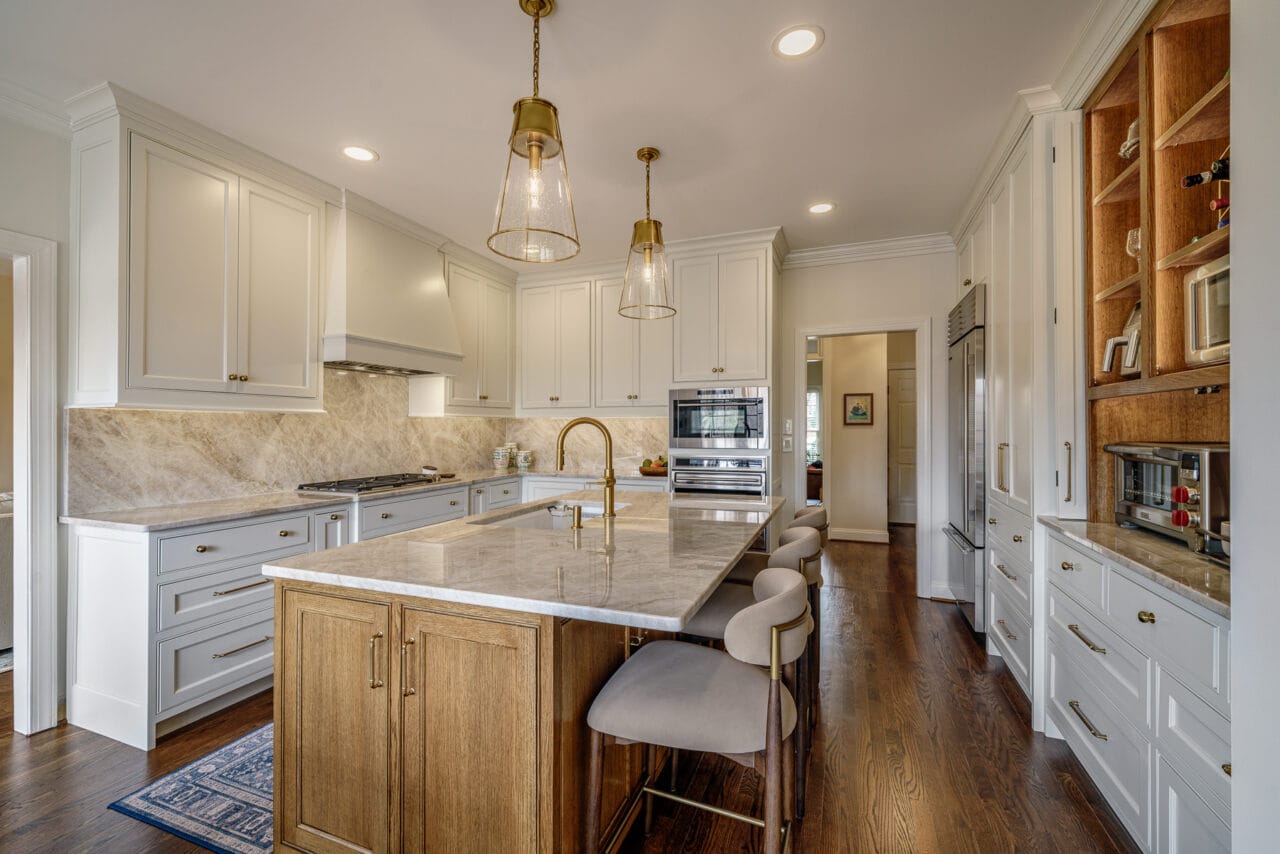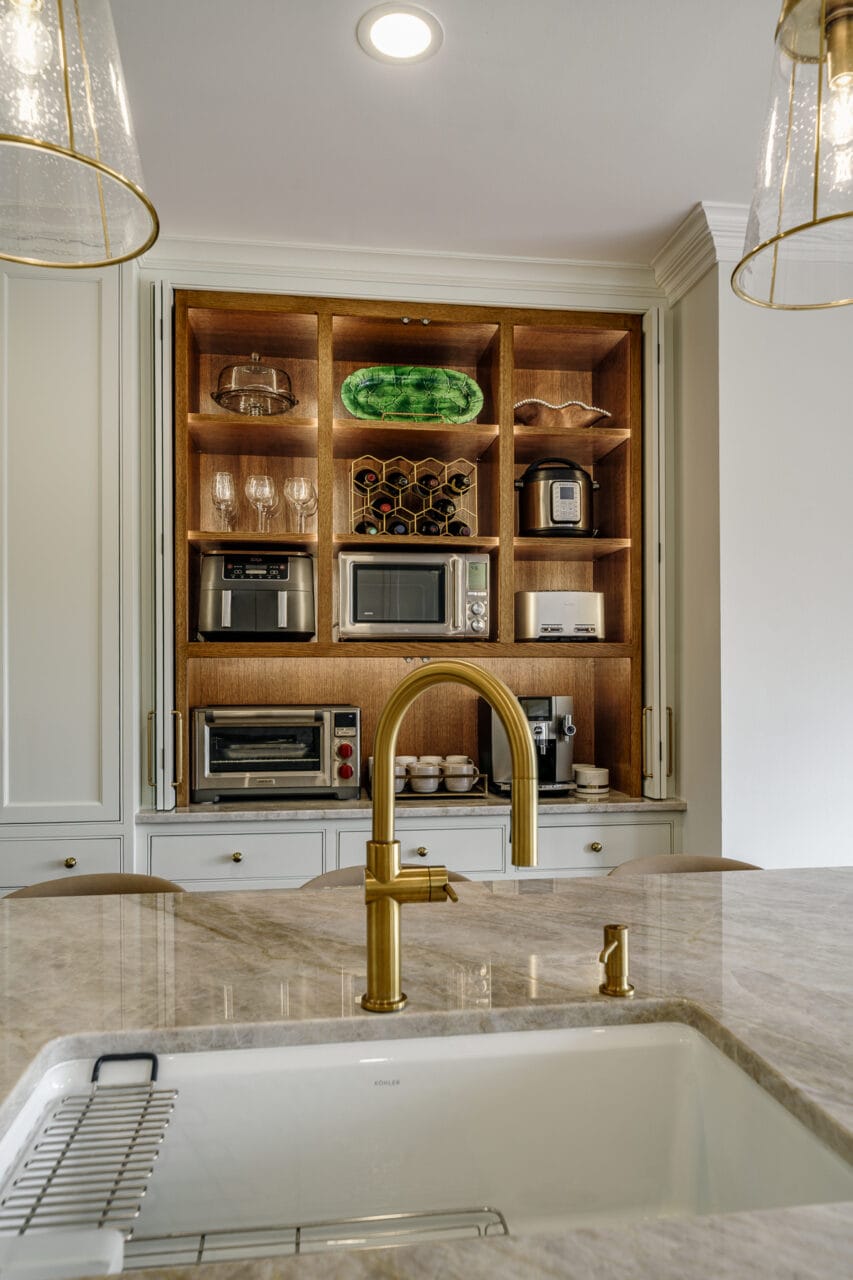
A contrast island is one of the most effective ways to add depth, character, and visual balance to a kitchen design. Rather than having all cabinetry finished in the same material or color, a contrasting island creates a focal point that anchors the space and breaks up large expanses of cabinetry. This design approach helps a kitchen feel more layered and intentional, giving it a custom, curated appearance. A well-designed island can also improve the overall flow of the room by drawing the eye toward the center of the space, creating a sense of harmony between the kitchen’s functional and aesthetic elements.
There are several ways to achieve this look, with a contrasting color or a coordinating wood tone being two of the most popular options. A color contrast island uses a different paint color than the surrounding cabinets, such as pairing white perimeter cabinetry with a blue island for a bold and sophisticated statement. Whereas a wood contrast island introduces natural texture and warmth through stained or natural wood finishes while the surrounding cabinets remain painted. While color contrast islands tend to create a more dramatic visual impact, wood contrast islands offer a softer, organic feel that adds richness and timeless appeal. Both options create a more well-rounded and balanced kitchen by introducing variation, preventing the space from feeling flat or monotonous, and highlighting the island as a central design feature.
-
"Photo by Jay Sinclair"
-

"Photo by Jay Sinclair"
-
"Photo by Jay Sinclair"